Wednesday, July 4, 2018

"On the Nature of Laughter" ("De l'essence du rire"; 1855) by Charles Baudelaire (1/3: Laughter Is Evil by Nature)

(Picture taken from "BAUDELAIRE : DE L’ESSENCE DU RIRE (annoté): Curiosités Esthétiques (French Edition) Kindle Edition." amazon. (https://www.amazon.com/BAUDELAIRE-LESSENCE-annot%C3%A9-Curiosit%C3%A9s-Esth%C3%A9tiques-ebook/dp/B019DEBKLG. February 13, 2018.)

In his "De l'essence du rire,"* Baudelaire seems to make sense of three things: 1. laughter is evil by nature; 2. the birth of laughter and Christianity; 3. a distinction should be drawn between joy and laughter, the comic and the grotesque, the absolute comic ("le comique absolu") and the significative comic ("le comique significatif").**

II
1.         Aux yeux de Celui qui sait tout et qui peut tout, le comique n’est pas (In the eyes of the Almighty, the comic does not exist).
2.         le comique disparaît au point de vue de la science et de la puissance absolues (From the viewpoint of the absolute power and the absolute knowledge, the comic disappears).
3.         le rire est généralement l’apanage des fous, et qu’il implique toujours plus ou moins d’ignorance et de faiblesse (Laughter is in general a privilege of the crazy, and it implies more or less ignorance or weakness).
4.         Il est certain, si l’on veut se mettre au point de vue de l’esprit orthodoxe, que le rire humain est intimement lié à l’accident d’une chute ancienne, d’une dégradation physique et morale. Le rire et la douleur s’expriment par les organes où résident le commandement et la science du bien ou du mal : les yeux et la bouche (It is certain that, when one speaks from a stance of orthodoxy, human laughter is closely linked to the accident of the Ancient Fall, a degradation both physical and moral. Laughter and pain are expressed by organs in which commands and knowledge of Good and Evil reside: the eyes and the mouth).
5.         le comique est un élément damnable et d’origine diabolique (the comic is a damnable element and it is of a diabolic origin).

III
1.         Le rire vient de l’idée de sa propre supériorité. Idée satanique s’il en fut jamais (Laughter comes from the idea of one's own sense of superiority. A satanic idea if there was any) !
2.         le rire est une des expressions les plus fréquentes et les plus nombreuses de la folie (laughter is the most frequent and numerous expression of madness).
3.         si l’on veut creuser cette situation, on trouvera au fond de la pensée du rieur un certain orgueil inconscient (if one is willing to go deep into this situation, one will find in the depths of the thought of laughter a certain unconscious pride).

IV
1.         Le rire est satanique, il est donc profondément humain. Il est dans l’homme la conséquence de l’idée de sa propre supériorité ; et, en effet, comme le rire est essentiellement humain, il est essentiellement contradictoire, c’est-à-dire qu’il est à la fois signe d’une grandeur infinie et d’une misère infinie, misère infinie relativement à l’Être absolu dont il possède la conception, grandeur infinie relativement aux animaux. C’est du choc perpétuel de ces deux infinis que se dégage le rire. Le comique, la puissance du rire est dans le rieur et nullement dans l’objet du rire. Ce n’est point l’homme qui tombe qui rit de sa propre chute, à moins qu’il ne soit un philosophe, un homme qui ait acquis, par habitude, la force de se dédoubler rapidement et d’assister comme spectateur désintéressé aux phénomènes de son moi. Mais le cas est rare (Laughter is satanic. It is then profoundly human. It is the consequence in the person with an idea of a sense of superiority about himself. And, indeed, as laughter is essentially human, it is essentially contradictory. This is to say that it is at once a sign of infinite greatness and a sign of infinite misery, with the infinite misery in regard to the absolute Being and the infinite greatness in regard to animals. It is from this perpetual crash of these two infinities that laughter emerges. The comic, the power of laughter, is in the person who laughs and in no way in the object he laughs at. The one who falls never laughs at his own fall unless he is a philosopher, a man who has habitually acquired the strength to remain detached from phenomena concerning his ego and to reamain as a disinterested looker-on. But this is a rare case).
2.         le rire est signe d’infériorité relativement aux sages (laughter, in regard to sages, is a sign of inferiority).


*MLA7: Baudelaire, Charles Pierre. "De L'essence Du Rire." Charles Baudelaire: Curiosités Esthétiques. Wikisource, N. p, n.d. Web. 14 July 2018. <https://fr.wikisource.org/wiki/De_l%E2%80%99essence_du_rire>.

MLA8: Baudelaire, Charles Pierre. “De L'essence Du Rire.” Charles Baudelaire: Curiosités Esthétiques, Wikisource, fr.wikisource.org/wiki/De_l%E2%80%99essence_du_rire.

** The following translations are mine.

Monday, January 29, 2018

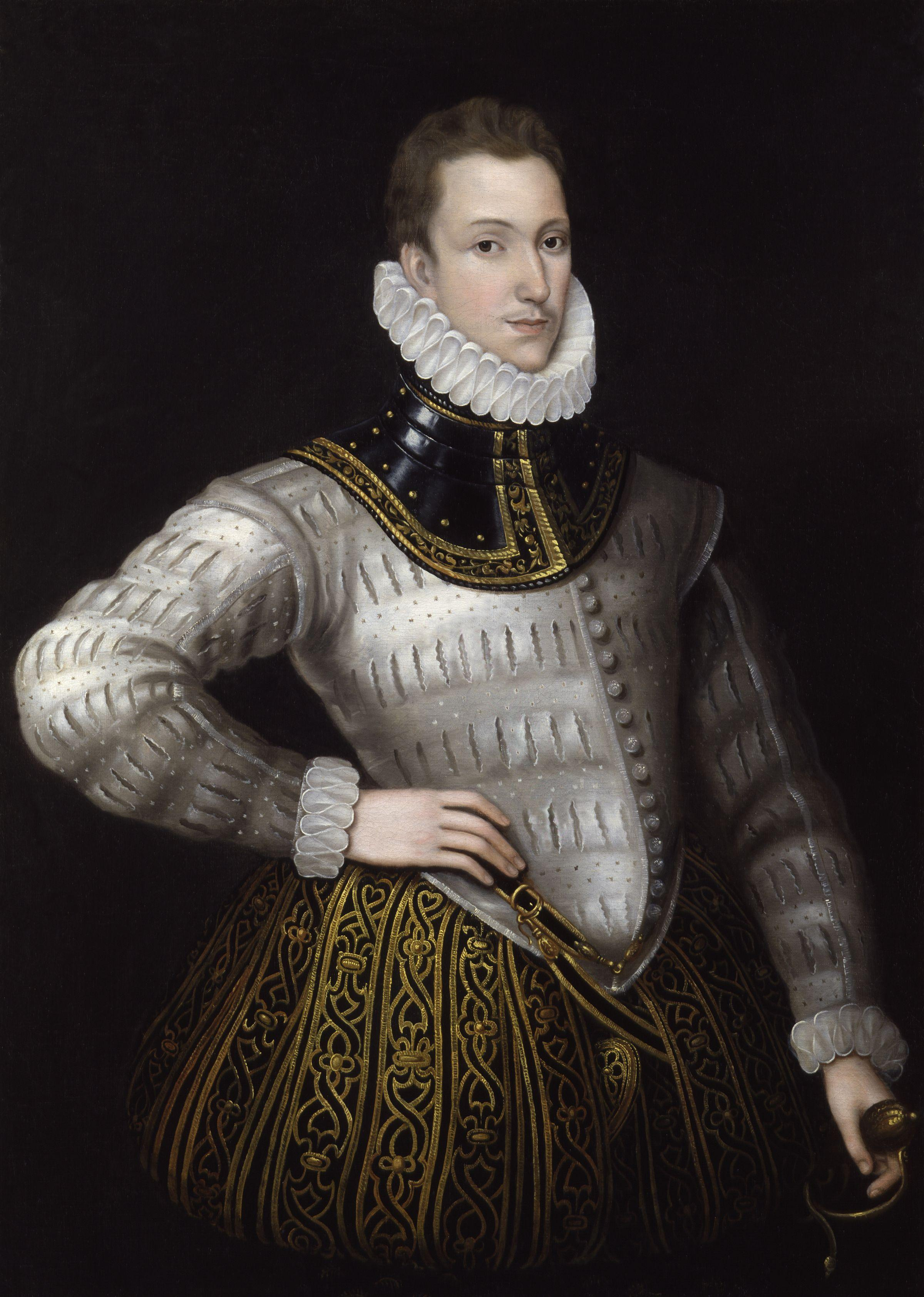
Sir Philip Sidney on Delight and Laughter (1595)

Picture taken from "Philip Sidney." Wikipedia. (portal); captured and cropped (direct source: https://upload.wikimedia.org/wikipedia/commons/f/f9/Sir_Philip_Sidney_from_NPG.jpg. January 29, 2018.).

Like Plato, Sidney has a negative take on laughter, which in his understanding comes from sneering at others' deformity, misery, or inferiority in any form (see Plato on Comedy & Laughter (I) ). While drawing the distinction between delight and laughter, Sidney again reminds us of one of his predecessors, Demetrius, the author of De Elocutione, which distinguishes "the humorous" (to provoke laughter) and "the charming" (to give pleasure), with the former being typical of buffoons and the latter being proper of wits (see De Elocutione: Grace & Charm of Humor).

According to Sidney, laughter comes from derision, not delight. Laughter is an expression of scorn; delight is an experience of joy. When we laugh at others, we laugh at their misery; when we laugh at ourselves, we try to deal with our own. Laughter, in other words, pains people. This viewpoint may be somewhat extreme and such a distinction may be least convincing, but we are given the opportunity to peep into some of the earliest efforts that lay down the foundation for humor studies. Here are two paragraphs taken from "The Defence of Poesie" or "An Apology of Poetry" (1595):

But our comedians [may well refer to comedy playwrights] think there is no delight without laughter; which is very wrong, for though laughter may come with delight, yet cometh it not of [from] delight, as though delight should be the cause of laughter; but well may one thing breed both together: nay, rather in themselves they have, as it were, a kind of contrariety; for delight we scarcely do, but in things that have a conveniency to ourselves, or to the general nature; laughter almost ever cometh of [from] things most disproportioned to ourselves and natureDelight hath a joy in it, either permanent or present. Laughter hath only a scornful tickling. For example, we are ravished with delight to see a fair woman, and yet are far from being moved to laughter. We laugh at deformed creatures, wherein certainly we cannot delight. We delight in good chances, we laugh at mischances; we delight to hear the happiness of our friends or country, at which he were worthy to be laughed at that would laugh; we shall contrarily laugh sometimes to find a matter quite mistaken and go down the hill against the bias,* in the mouth of some such men, as for the respect of them one shall be heartily sorry, yet he cannot choose but laugh; and so is rather pained than delighted with laughter. Yet deny I not but that they may go well together; for as in Alexander's picture** well set out, we delight without laughter, and in twenty mad antics we laugh without delight, so in Hercules, painted with his great beard and furious countenance, in a woman's attire, spinning at Omphale's **commandment, it breedeth both delight and laughter. For the representing of so strange a power in love procureth delight, and the scornfulness of the action stirreth laughter.

But I speak to this purpose, that all the end of the comical part be not upon such scornful matters as stirreth laughter only, but, mixed with it, that delightful teaching which is the end of poesy. And the great fault even in that point of laughter, and forbidden plainly by Aristotle, is that they stir laughter in sinful things, which are rather execrable than ridiculous: or in miserable, which are rather to be pitied than scorned (Sidney 358).

* Contrary to its expected course. The balls used in lawn bowling have a bias, a peculiarity in weight or shape that causes them to swerve (Sidney 358n9).
** Plutarch, in his Life of Alexander 4, discusses Apelles' (4th c. B.C.E.) famous painting of Alexander [Robinson's note] (Sidney 358n1).
*** Queen of Lydia, whom the legendary hero served fro 3 years as a slave in order to be purified of a murder; during that time he fell in love with her (Sidney 358n2).

-- Sidney, Philip. "An Apology for Poetry." The Norton Anthology of Theory and Criticism. Eds. Vincent B. Leitch, et al. New York: W.W. Norton & Co, 2001. Print. 326-362. Print.

Saturday, January 27, 2018

Nicholas Udall: Ralph Roister Doister (c. 1553)

Picture taken from "Famous Gay, Lesbian and Bisexual People Born in the 1500s." Ranker: Vote on Everything. (https://www.ranker.com/list/famous-gay-lesbian-and-bisexual-people-born-in-the-1500_s/famous-gay-and-lesbian. January 27, 2018.)

※ The following is taken intact from Figueroa-Dorrego & Larkin-Galiñanes's book, A Source Book of Literary and Philosophical Writings about Humour and Laughter (Lewiston, Queenston, Lampeter: The Edwin Mellen Press, 2009. 200), without any of my personal critique. This blog post is therefore subject to immediate removal upon notice. ※

Moving now to England, comedy as a dramatic genre starts with Nicholas Udall's Ralph Roister Doister (c. 1553),  under the influence of Roman comedy, and with a prologue that states the author's intention to provide "mirth with modestie" and avoid any kind of abuse and scurrility:

Knowing nothing more commendable for a man's recreation
Than Mirth which is used in an honest fashion:
For Mirth prolongeth lyfe, and causeth health.
Mirth recreates our spirites and voydeth pensivenesse,
Mirth increaseth amities, not hindering our wealth,
[...] ("Prologue," ll. 6-10. Udall 1984: 101)*

This is certainly a hymn to mirth, understood as good-natured, convivial merriment expressed by laughter, following the most favourable views of humour from classical times to the Renaissance. Instead of linking humour with scorn, Udall associates it with health and friendship, and presents it as having an important role in human recreation, and as a good remedy against depression. The play is actually full of roistering and farcical actions performed by stock characters borrowed from Plautus and Terence, whose plays were well known by any educated person at the time, since they were part of their instruction. Burlesque, misunderstanding, and the clash of opposing parties that finally get reconciled are basic elements of this play that will later be developed by Shakespeare, for instance, in most of his romantic comedies.

* Udall, Nicholas. "Roister Doister." Four Tudor Comedies. Ed. William Tydeman. Harmondsworth: Penguin, 1984. 99-205. Print.

-- Figueroa-Dorrego, Jorge and Cristina Larkin-Galiñanes. A Source Book of Literary and Philosophical Writings about Humour and Laughter: The Seventy-Five Essential Texts from Antiquity to Modern Times. Lewiston, Queenston, Lampeter: The Edwin Mellen Press, 2009. 198-200. ISBN-13: 978-0-7734-4730-1; ISBN-10: 0-7734-4730-X.