Monday, December 27, 2010

Donatus, Horace, and Aristotle on Humor: the Early Modern Theory of Comedy


Picture joined with graphics taken from (from left to right):
a page of Grammaire Latine by Aelius Donatus--http://www.digitalhit.com/posters/p/1588870; 
statue of Horace--http://www.the-romans.co.uk/lyric.htm; 
Aristotle's Poetics--http://en.wikisource.org/wiki/The_Poetics_translated_by_Bywater. December 26, 2010.

 The following is taken intact from Figueroa-Dorrego & Larkin-Galiñanes's book, A Source Book of Literary and Philosophical Writings about Humour and Laughter (Lewiston, Queenston, Lampeter: The Edwin Mellen Press, 2009. 196-197), without any of my personal critique. This blog post is therefore subject to immediate removal upon notice. 

The Concept of Humour in the Early Modern Theory of Comedy

In the early sixteenth century, the main authorities on drama were Horace (first century BC) and Donatus (fourth century AD),* but neither of them analysed humour in comedy. Donatus, for instance, declared comedy a mirror of everyday life, which used fictitious characters and actions and had a didactic purpose. This obviously gave some respectability to this genre, and became one of the main arguments of comic theory in the early modern period (see Herrick 1950: 36-37, and Stott 2005: 5-6).* However, it said nothing about the humorous element of comedy. A similar thing happened in the Middle Ages, when drama disappeared and the term "comedy" was sometimes used for texts in prose or verse, often lacking the risible component. An example of this is Dante's Divine Comedy (1308-21), a narrative poem that contains little humour but is qualified as a [end of Page 196] comedy by its author because it has a happy ending and a style not as elevated as that of tragedies.223

Comments about the use of humour in comedy began to appear in the mid-sixteenth century with the revival of Aristotle's Poetics, a treatise which had been largely neglected in late Antiquity and the Middle Ages. Those comments were mainly written by Italian men of letters who managed to make Aristotle's Poetics a central text for literary theory in the early modern period. They did so by conflating it with Horace's Ars Poetica, which produced a partial loss of its original meaning. Aristotle's literary theory was considered a more comprehensive analysis of genres, and allowed the formulation of norms based on generic practice rather than on the individual practice of those ancient authors that humanists considered the models for each genre--e.g. Terence* for comedy (see Javitch 1999).* With this revival of the [sic] Poetics, the Aristotelian concept of the ridiculous became important in later explanations of comedy.

233 In his Epistle to Can Grande, Dante Alighieri argues that comedy "introduces a situation of adversity, but ends its matter in prosperity, as is evident in Terence's comedies," and "uses an unstudied an low style" (1984: 31).

-- Figueroa-Dorrego, Jorge and Cristina Larkin-Galiñanes. A Source Book of Literary and Philosophical Writings about Humour and Laughter: The Seventy-Five Essential Texts from Antiquity to Modern Times. Lewiston, Queenston, Lampeter: The Edwin Mellen Press, 2009. 196-197.

Aelius Donatus (fl. mid 4th century) was a Roman grammarian and teacher of rhetoric. The only fact known regarding his life is that he was the tutor of St. Jerome. (from Wikipedia. http://en.wikipedia.org/wiki/Aelius_Donatus. December 27, 2010.)
* Herrick, Marvin 1950. Comic Theory in the Sixteenth Century. Urbana: University of Illinois Press.
  Stott, Andrew 2005. Comedy. New York: Routledge.
* Publius Terentius Afer (195/185–159 BC).
* Javitch, Daniel 1999. "The assimilation of Aristotle's Poetics in sixteenth-century Italy." The Cambridge History of Literary Criticism. Vol. 3. The Renaissance. Ed. Glyn P. Norton. Cambridge: Cambridge University Press. 53-65.

Friday, December 17, 2010

Coursepack Articles for Shakespeare & Humor


This is only to remind me of the articles assigned for this course. I believe there will be overwhelmingly more for me to peruse. In the near future, all recommended articles and books will be posted here to keep track of what I read and to share with whoever shares my interest.

This is also part of my student portfolio for this course (p.20).


※The choice and the binding order of the articles are made by and belong to Professor Vivienne Westbrook. This list will be immediately removed from my blog post on her request.


Coursepack Articles
(in its binding order)

McFadden, George. “Comic Ethos: The Classical View.” Discovering the Comic. Princeton: Princeton University Press, 1982. 49-79.

Jensen, Phebe. “Falstaff in Illyria: The second Henriad and Twelfth Night.” Religion and Revelry in Shakespeare’s Festive World. Cambridge and New York: Cambridge University Press, 2008. 149-193.

Feinberg, Leonard. “Nonsense Humor: Aggression Against Logic and Order.” The Secret of Humor. Amsterdam: Rodopi, 1978. 169-183.

Palfrey, Simon and Tiffany Stern. “From Crowds to Clowns.” Shakespeare in Parts. Oxford and New York: Oxford UP, 2007. 165-183.

Levin, Harry. “Introduction.” Veins of Humor. Ed. Harry Levin. Cambridge, MAHarvard University Press, 1972. 1-16.

Gorfain, Phyllis. “Towards a Theory of Play and the Carnivalesque in Hamlet.” Shakespeare and Carnival: After Bakhtin. Ed. Ronald Knowles. London:         Palgrave Macmillan, 1998. 152-176.

Billig, Michael. “Superiority Theories: Hobbes and Other Misogelasts.” Laughter and Ridicule: Towards a Social Critique of Humour. London: Sage, 2005. 37-56.

---. “Incongruity Theories and Gentlemanly Laughter.” Laughter and Ridicule: Towards a Social Critique of Humour. London: Sage, 2005. 57-85.

Morreall, John. “Humour and the Conduct of Politics.” Beyond a Joke: The Limits of Humour. Ed. Sharon Lockyer and Michael Pickering. New York: Palgrave     Macmillan, 2005. 63-78.

Williams, Robert I. “Groundings, Groundlings.” Comic Practice/Comic Response. London and Toronto: Associated UP, 1993. 11-34.

E-text Article

David, Jessica Milner. “Introduction to the Transaction Edition.” Farce. New    Brunswick, NJ.: Transaction, 2003. 1-69. Print. (David, Jessica Milner. “Introduction to Second Edition, 2003.” PDF.)


(The choice and the binding order of the articles are made by and belong to Professor Vivienne Westbrook. This list will be immediately removed from my blog post on her request.)

Thursday, December 16, 2010

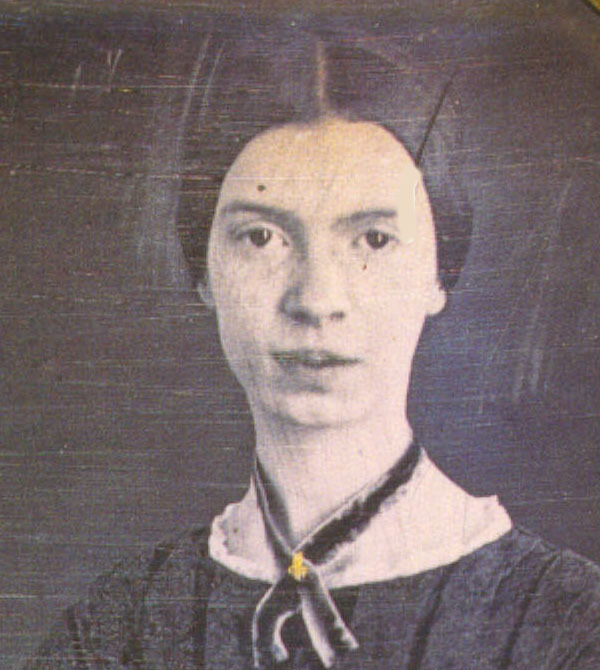
Juhasz, Miller, Smith: Comic Power in Emily Dickinson

While thumbing through books in front of the Emily Shelf (that's how I call the  PS1541 Z-- shelf at NTU, almost all books are devoted to Dickinson), I found one book I wouldn't want to miss for the whole world:

Juhasz, Suzanne, Cristanne Miller, and Martha Nell Smith. Comic Power in Emily Dickinson. Austin: University of Texas Press, 1993.

This book is composed of five chapters:

Chapter 1: Comedy and Audience in Emily Dickinson's Poetry
Chapter 2: The Big Tease by Suzanne Juhasz
Chapter 3: The Poet as Cartoonist by Martha Nell Smith
Chapter 4: The Humor of Excess by Cristanne Miller
Chapter 5: Comic Power

Before I have enough time to play the role of a responsible reader and blogger, here are two reviews for your reference:

(screen capture: taken intact from: Project Muse

(screen capture: taken intact from: goodreads.