Sunday, November 28, 2010

Isaac Barrow: "Against Foolish Talking and Jesting" (continued)


While recognizing the application of wit in humor and the association between wit and sophism (in defending oneself unjustly), Barrow contends that wit may and should "serve under the banner of truth and virtue":

[s]ince men are so irreclaimably disposed to mirth and laughter, it may be well to set them in the right pin, to divert their humour into the proper channel, that they may please themselves in deriding things which deserve it, ceasing to laugh at that which requireth reverence or horror.

Like Cicero who insists on the distinction between the decent laughter and the indecent laughter, Barrow draws a line between what makes a proper laughing matter and what does not: "[t]he proper objects of common mirth and sportful divertissement are mean and petty matters" ("Against Foolish Talking and Jesting"). All matters by nature grave, divine, or virtuous should not fall prey to jesting, for that does not help Christians maintain "their habitual composedness, gravity, and modesty" (Figueroa-Dorrego & Larkin-Galiñanes 188).

*Of course Cicero is a predecessor to Barrow in that he treats humor as a rhetorical device. Barrow, however, assumes an unprecedented laudatory attitude toward humor and laughter. His observation of various rhetorical and social functions of humor bears striking similarities to that of Liu Xie's. This coincidence across cultures makes him stand apart from his predecessors.

Friday, November 26, 2010

Isaac Barrow: "Against Foolish Talking and Jesting"

Misleading though the title may be, this essay by Isaac Barrow (one of the Several Sermons on Evil-Speaking, 1678) advocates a different approach toward humor instead of dealing out a follow-up diatribe and censoring humor with a Puritan attitude.

Based on St. Paul's advice to the Ephesians: "Nor Foolish talking, nor jesting, which are not convenient" (5:4), Barrow argues that "those words should not be understood as a condemnation of all kind of facetious speech, as was commonly done, but only of that which ws foolish and impertinent" (Figueroa-Dorrego & Larkin-Galiñanes 186).

The morose, austere, sombre Puritan approach to life, according to Barrow, may be a result from an erroneous assumption of humor, a denial of its social function, and unawareness of the decent joy due a decent Christian:

For Christianity is not so tetrical, so harsh, so envious, as to bar us continually from innocent, much less from wholesome an useful pleasure, such as human life doth need or require. And if jocular discourse may serve to good purposes of this kind; if it may be apt to raise our drooping spirits, to allay our irksome cares, to whet our blunted industry, to recreate our minds being tired and cloyed with graver occupations; if it may breed alacrity, or maintain good humour among us; if it may conduce to sweeten conversation and endear society; then it is not inconvenient, or unprofitable. ("Against Foolish Talking and Jesting")

Barrow distinguishes himself from his previous thinkers on humor, both classical and Christian, in these two aspects:
  1. As a clergyman, he asserts that humor is acceptable or even recommendable in a Christian society (Figueroa-Dorrego 186).
  2. His reasoning of the origin of humor is based on "a cognitive and rhetorical perspective rather than from an ethical standpoint" (ibid).*
Barrow believes in incongruity as the cause of humor effect and that different forms of incongruity  "produce surprise, admiration, and delight" (ibid). What follows is an excerpt that best reflects his observation and how incongruity functions positively in language (No doubt it will reminds us of what is said in The Literary Mind and the Carving of Dragons by Liu Xie; article-search key word (the search box on the right): The Literary Mind).

[...] sometimes it playeth in words and phrases, taking advantage from the ambiguity of their sense, or the affinity of their sound: sometimes it is wrapped in a dress of humorous expression; sometimes it lurketh under an odd similitude; sometimes it is lodged in a sly question, in a smart answer, in a quirkish reason, in a shrewd intimation, in cunningly diverting, or cleverly retoring an objection: sometims it is couched in a bold scheme of speech, in a tart irony, in a lusty hyperbole, in a startling metaphor, in a plausible reconciling of contradictions, or in acute nonsense: [...] sometimes it riseth from a lucky hitting upon what is strange, [...] It is in short, a manner of speaking out of the simple and plain way (such as reason teacheth and proveth things by), which by a pretty surprising uncouthness in conceit or expression doth affect and amuse the fancy, stirring in it some wonder, and breeding some delight thereto. It raiseth admiration, as signifying a nimble sagacity of apprehension, a special felicity of invention, a vivacity of spirit, and reach of wit more than vulgar [...] It also procureth delight, by gratifying curiosity with its rareness or semblance of difficulty (as monsters, not for their beauty, but their rarety; as juggling tricks, not for their use, but their abstruseness, are beheld with pleasure) by diverting the mind from its road of serious thoughts; by instilling gaiety and airiness of spirit; by provoking to such dispositions of spirit in way of emulation or complainsance; and by seasoing matters, otherwise distasteful or insipid, with an unusual, and thence grateful tang. ("Against Foolish Talking and Jesting")
  
(to be continued)

Thursday, November 18, 2010

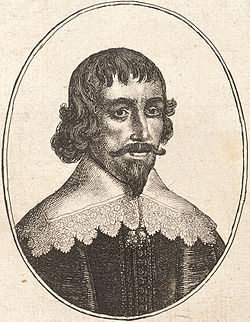
The Puritan Attack (III): William Prynne

According to Figueroa-Dorrego, William Prynne (1600-1669) had in the English Renaissance launched "the most explicit and extensive rejection of laughter and whatever actions or words may produce it in plays" (183). In his work Histrio-Mastix: The Players Scourge, or Actors Tragedie (1633), he claims that "[t]he last unlawful concomitant of stage-plays is profuse lascivious laughter, accompanied with an immoderate applause of those scurrilous plays and actors, which Christians should rather abominate than admire" (Figueroa-Dorrego & Larkin-Galiñanes 284).

(portrait taken from: http://www.pepysdiary.com/p/441.phpThe Diary of Samuel Pepys: Daily entries from the 17th century London diary. November 18, 2010.)

The following 6 points are made with quotes from Histrio-Mastix by Figueroa-Dorrego in the hope of summing up Prynne's attitude toward and attack upon laughter and the comedy:

  1. "in regard of the original efficient cause of it, which is commonly some obscene, lascivious sinful passage, gesture, speech, or jest (the common object of men's hellish mirth) which should rather provoke the actors [and] the spectators to penitent sobs than wanton smiles." Following classical and patristic sources, Prynne argues that laughter is produced by "filthy scurrilous objects" and therefore is evil, "discovering nothing but a graceless heart, delighting only in ribaldry, in uncleanness," which are improper for a Christian (end of 183).
  2. As Gosson maintained, theatrical laughter must be sinful also "in regard of its excess, it being altogether boundless beyond the rules of modesty, temperance, Christianity, sobriety, by which it should be regulated."
  3. Because its end is "only to satiate men's fleshly lusts with secular jollity and delights of sin, to pamper, to arm the rebellious flesh against the spirit," and therefore it is incompatible with Christian repentance, sorrow, and humility.
  4. Profuse laughing, especially at the actions and words of a ribald play, is "altogether inconsistent with the gravity, modesty, and sobriety of a Christian," who should bewail his and other people's sins, following the example of Christ, the Apostles, and the Fathers of the Church, rather than laugh.
  5. As Prynne has argued before, theatrical laughter also implies "a public approbation to all the ribaldry and profaneness that is either personated or perpetrated on the stage, and so makes these laughers deeply guilty of it."
  6. It has sinful consequences such as impudence, effeminacy, incivility, looseness, and "indisposition to every holy duty."*
*Figueroa-Dorrego & Larkin-Galiñanes 183-184.